In this article
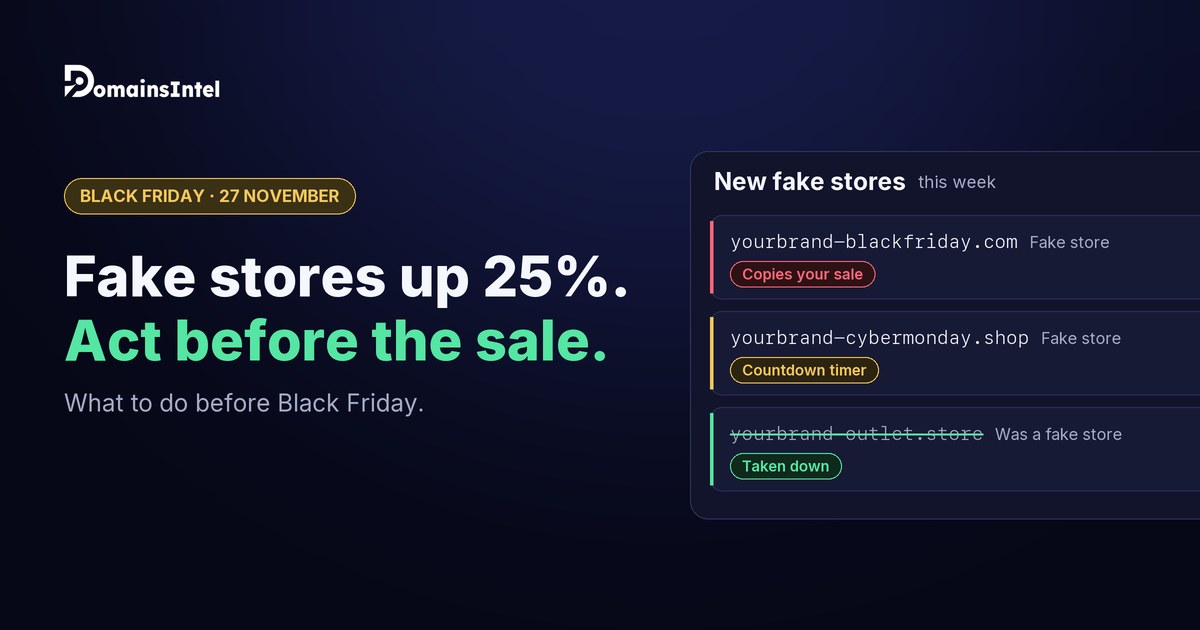
Fake stores multiply before Black Friday, and 2026 is no exception. So far in November 2026, DomainsIntel is finding about 25% more new fake stores than its October average. The days before the sale are when a brand can do the most: every fake store found and taken down now is one that is not live on the busiest shopping days of the year.
Why do fake stores multiply around Black Friday?
Three things make Black Friday the best week of the year for fake stores:
- Big discounts look normal. Shoppers expect 50% to 70% off, so a fake store offering the same does not raise suspicion.
- Everyone is looking for deals. Searches and ads for "Black Friday" and "sale" peak, and a fake store only needs a small share of that traffic.
- Missing orders go unnoticed. Shipping is slow in late November, so a shopper who never receives an order often realises it weeks later, when the fake store has already moved on.
How big is the rise this year?
DomainsIntel's own monitoring shows about 25% more new fake stores in November so far than its October average. Other researchers see the same trend:
- Check Point Research counted more than 4,000 new domains registered in October and the first eight days of November 2026 with keywords like "Black Friday" or "Cyber Monday", or the names of big retailers and delivery companies. Nearly one in five was already classified as risky.
- NordVPN mapped a single network of more than 10,000 fake store domains impersonating 166 fashion and luxury brands in 26 countries, with 1,549 stores active on 3 November 2026. Adidas was the most copied brand with 52 domains, followed by Ralph Lauren (30) and Dr. Martens (29).
The NordVPN network also shows how organised these groups have become. It re-registers expired domains that already rank in search engines, sends visitors to other fake stores when one is blocked, and some of its stores were even recommended by AI shopping assistants as official outlets.
What does a fake Black Friday store look like?
Most are copies of a real brand's shop, with a few seasonal touches:
- A domain that adds a seasonal word to your brand name:
yourbrand-blackfriday.com,yourbrandsale.shop,yourbrand-cybermonday.store, sometimes with a year or a country. - Your real campaign, copied. Your banners, product photos and even your promo codes, often taken from your own site or newsletter.
- "Early access" and countdown timers that push shoppers to pay before they think.
- Discounts on everything, including products you never put on sale.
- Payment by card only on a separate checkout page, or by bank transfer for an "extra discount".
What should you do before 27 November?
- Watch for new domains with your brand name and seasonal words ("black friday", "cyber monday", "sale", "outlet"), every day until the end of the year.
- Prepare your takedown kit now: your trademark details, screenshots of your real campaign, and short report templates for hosts, registrars and browsers. When a fake store appears, you send a complete report the same day.
- Tell customers where your sale is. Publish your official Black Friday dates, your domain and your promo codes on your site, in your newsletter and on social media. A fake store is easier to spot when customers know what the real offer looks like.
- Brief your customer service team. Complaints about orders you have no record of are often the first sign of a fake store. Ask the team to pass on every URL a customer mentions.
- Report fast and follow up after 3 days. The guide to taking down a fake website lists who to report to, in what order, and what to say.
Why does speed matter more this week?
For the fake stores DomainsIntel took down in its 30-day study, the median time from detection to takedown was 2 to 4 days. In an ordinary week, that is fast. In Black Friday week, a fake store that stays live for 4 days covers Black Friday, the weekend and Cyber Monday: the days when it can take the most orders.
That is why the days before the sale matter. A fake store found on 20 November can be offline before Black Friday. The same store found on 27 November will still be taking payments on Cyber Monday.
What happens after Black Friday?
The problem does not end on 30 November:
- Complaints arrive late. Shoppers notice missing orders in December, and some ask the real brand for a refund or open a chargeback.
- New copies keep coming. Fake stores follow the calendar: Black Friday, Cyber Monday, then Christmas and the January sales.
- Your brand pays for it. Customers who were scammed by a store using your name often trust your brand less, even though you did nothing wrong.
Keep monitoring through the end of the year, and keep your customer service team briefed until the January sales are over.
DomainsIntel checks new domains every day, collects the evidence and takes down fake stores for the brands it monitors, including through Black Friday week. To see the fake sites using your brand today, get a free report.
Frequently asked questions
Are there more fake stores around Black Friday?
Yes. In November 2026, DomainsIntel found about 25% more new fake stores than its October average. Big discounts look normal that week, shoppers are searching for deals, and missing orders go unnoticed for longer because shipping is slow.
Can a fake store be taken down before the sale?
Often, if it is found early. In DomainsIntel's 30-day study, the median time from detection to takedown was 2 to 4 days, so a fake store found a week before Black Friday can be offline before the sale. One found on Black Friday itself is likely to still be live on Cyber Monday.
How do I warn my customers before Black Friday?
Publish your official sale dates, your real domain and your promo codes on your site, in your newsletter and on social media: a fake store is easier to spot when customers know what the real offer looks like. Brief your customer service team too, so they pass on every suspicious URL a customer mentions.
What happens to fake stores after Black Friday?
They follow the calendar: after Black Friday and Cyber Monday come Christmas and the January sales. Complaints from scammed shoppers also arrive late, often in December. DomainsIntel checks new domains every day, so new copies are found and taken down through the end of the year.